At Li’l Miracles International Preschool, we believe that every child grows and learns in their own unique way. Early childhood is a stage filled with exploration, curiosity, and rapid development. During these formative years, careful observation of a child’s behaviour, communication, and social interactions helps parents and educators understand their developmental journey better.
One of the developmental conditions that parents sometimes hear about during early childhood is Autism Spectrum Disorder (ASD). Awareness about autism has increased significantly in recent years, and early understanding plays an important role in ensuring children receive the support they may need.
It is important to remember that every child develops at their own pace, and the presence of one or two behaviours does not necessarily indicate autism. However, being aware of certain early patterns can help parents and educators respond thoughtfully and seek professional guidance when required.
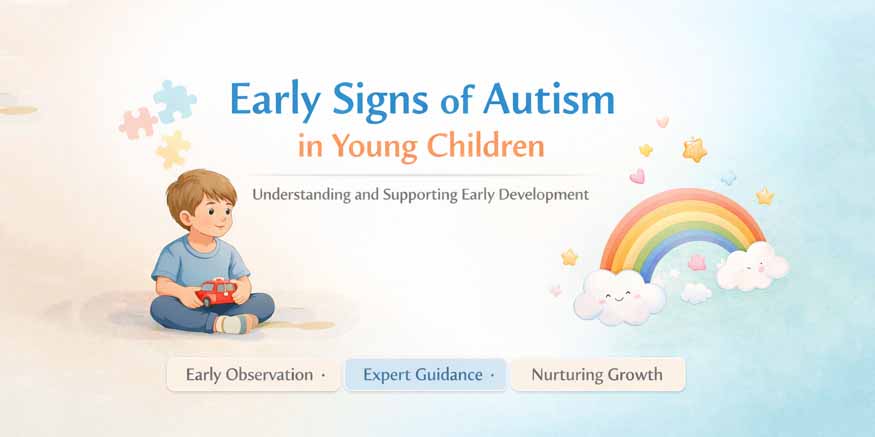
Understanding Autism Spectrum Disorder (ASD)
Autism Spectrum Disorder is a neurodevelopmental condition that can influence how a child communicates, interacts socially, and processes the world around them. The word “spectrum” is used because every child on the spectrum may present differently, with varying strengths and challenges.
Some children may show noticeable developmental differences during the toddler or preschool years, while others may show signs later as social demands increase.
Early observation and guidance can make a significant difference because young children’s brains are highly adaptable, and timely support can help them build essential life skills.
Early Signs Parents and Educators May Notice
While only qualified professionals can provide an accurate developmental evaluation, parents and teachers may sometimes notice certain patterns in a child’s behaviour. These observations simply serve as signals to explore further, not conclusions.
- Limited Eye Contact
- Delayed Speech or Language Development
- Delayed speech milestones
- Limited use of words for communication
- Repeating phrases instead of forming conversations
- Reduced Response to Name
- Limited Social Interaction
- Preferring to play alone frequently
- Difficulty engaging in group play
- Limited sharing of emotions or expressions
- Repetitive Behaviours
- Repeated hand movements
- Spinning objects
- Strong preference for specific routines
- Unusual Reactions to Sensory Experiences
- Loud sounds
- Bright lights
- Certain textures or clothing
- Limited Pretend Play
Children often make eye contact while communicating, smiling, or responding to their name. Some children with developmental differences may avoid or show limited eye contact during interactions.
Language develops differently for every child, but parents may notice:
A child may sometimes appear not to respond when their name is called, even when hearing ability is normal.
Children naturally show interest in people around them. Some early signs can include:
Certain repetitive movements or routines may be observed, such as:
Some children may be highly sensitive or under-responsive to sensory stimuli like:
By preschool age, children often engage in imaginative play, like pretending to cook or role-playing characters. Limited interest in such play can sometimes be noticed.
Why Early Awareness Is Important
Early awareness does not mean labelling a child. Instead, it allows parents and educators to understand the child’s needs better and support their development with patience and care.
When developmental differences are identified early, children can benefit from:
- Structured learning environments
- Supportive communication techniques
- Developmental therapies when needed
- Positive reinforcement of strengths
The goal is always to help the child build confidence, independence, and social skills in a nurturing environment.
The Role of Preschool Observation
Preschool environments often provide valuable insights because children interact with peers, teachers, and structured activities daily.
At Li’l Miracles International Preschool, our approach focuses strongly on life skills, emotional development, and confidence-building alongside academics. Teachers observe children in various activities such as play, communication, group interactions, and creative expression.
Such observations help educators understand each child’s unique learning style and personality.
Expert Guidance at Li’l Miracles International
A key strength of our institution is the presence of professional expertise within our leadership.
Our Co-Founder, Mrs. Riitu Sharma, is a Child Psychologist and Parenting Coach, who brings deep insight into early childhood behaviour and development. Her guidance ensures that our educational environment remains sensitive, informed, and supportive of every child’s developmental journey.
With her experience, the school emphasizes:
- Early observation and understanding of developmental milestones
- Positive behavioural guidance
- Strong parent–school communication
- Practical parenting support and counselling when required
This holistic approach helps create a safe and nurturing environment where every child can grow with confidence.
A Message to Parents
Parenthood often comes with many questions about a child’s growth and development. If parents ever notice behaviours that concern them, the best step is open communication with educators and qualified professionals.
Early conversations, professional guidance, and a supportive environment can make a meaningful difference in a child’s development.
At Li’l Miracles International Preschool, we firmly believe that every child is a miracle in their own way. With the right understanding, patience, and encouragement, children can continue to grow, explore, and reach their full potential.
Conclusion
Awareness about developmental differences like autism is not about creating worry—it is about creating understanding.
By observing early signs with sensitivity, seeking expert advice when needed, and nurturing each child’s individuality, parents and educators can work together to support children during their most important years of development.
At Li’l Miracles International Preschool, guided by the expertise of Mrs. Riitu Sharma, we remain committed to fostering confidence, emotional strength, and life skills, ensuring that every child receives the attention and care they deserve.
For more such learnings, read our blogs at www.lilmiracles.in
Riitu Sharma
Co-founder
Li’l Miracles International Preschool