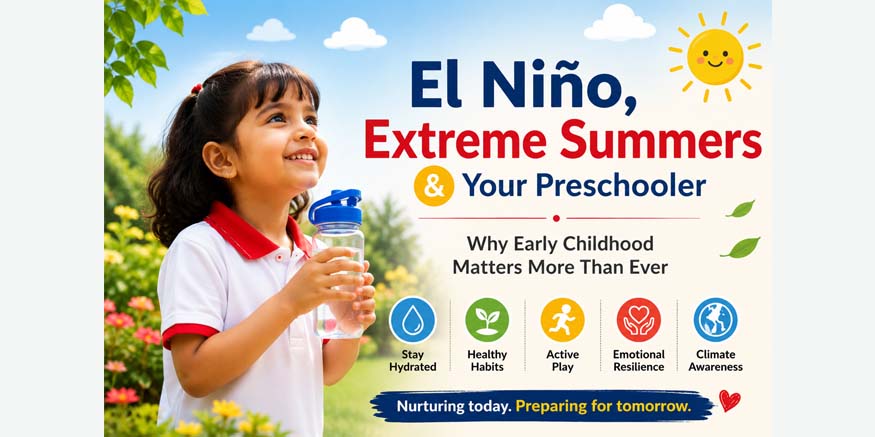
Why Early Childhood Matters More Than Ever
As temperatures soar year after year, parents across India are noticing a worrying trend—summers are becoming longer, hotter, and increasingly unpredictable. Climate experts are closely monitoring the effects of the upcoming El Niño phenomenon, which is often associated with hotter-than-average temperatures, reduced rainfall in many regions, and increased heatwave conditions.
While adults may find these weather changes uncomfortable, the impact on young children can be far more significant.
For preschool parents, this isn’t just a weather update—it’s a reminder of how crucial a child’s early years are in building resilience, healthy habits, and lifelong well-being.
What Exactly is El Niño?
El Niño is a naturally occurring climate pattern caused by the warming of ocean waters in the central and eastern Pacific Ocean. Although it occurs thousands of kilometers away from India, its effects are felt globally.
In India, El Niño years are often linked with:
- Higher temperatures
- Intense heatwaves
- Irregular rainfall patterns
- Increased risk of dehydration and heat-related illnesses
Why Preschoolers Are More Vulnerable to Heat
Children are not simply “small adults.”
A preschooler’s body responds differently to extreme weather conditions.
- Faster Dehydration
- Limited Temperature Regulation
- Continuous Physical Activity
- Increased Irritability and Fatigue
Young children lose fluids quickly and often don’t recognize or communicate thirst effectively. By the time they ask for water, they may already be mildly dehydrated.
A child’s body temperature rises faster than an adult’s, making them more susceptible to heat exhaustion.
Preschoolers love to run, jump, explore, and play. While movement is essential for development, excessive heat can make outdoor activity challenging and potentially unsafe.
Poor sleep due to hot nights, combined with heat exposure during the day, can affect mood, concentration, appetite, and emotional regulation.
The Hidden Impact of Extreme Summers on Child Development
Most discussions about heat focus on physical health, but extreme weather also influences learning and development.
Research has shown that:
- Poor sleep affects memory and concentration.
- Reduced outdoor play limits gross motor development.
- Excessive screen time often increases when children stay indoors.
- Heat-related discomfort can affect emotional well-being.
For preschoolers, every day is an opportunity to build essential life skills. When weather conditions limit exploration, movement, and social interaction, developmental opportunities can also be reduced.
Why Early Childhood Education Matters More Than Ever
In a world experiencing climate uncertainty, preschools play a critical role in supporting children beyond academics.
Quality early childhood environments help children develop:
Adaptability
Children learn to adjust routines, manage changing situations, and remain flexible—an increasingly valuable skill in today’s world.
Healthy Habits
Regular hydration, balanced nutrition, hygiene practices, and structured routines become second nature when reinforced consistently.
Emotional Resilience
When children learn to identify emotions, manage frustration, and express their needs effectively, they are better equipped to handle challenges.
Problem-Solving Skills
Future generations will face complex environmental challenges. Building curiosity, critical thinking, and creativity begins in the preschool years.
What Parents Can Do During Extreme Summers
Prioritize Hydration
Offer water frequently throughout the day rather than waiting for children to ask.
Fun water bottles, fruit-infused water, and hydration reminders can make drinking water more appealing.
Maintain Active Play
Avoid the hottest hours of the day, but don’t eliminate movement altogether.
Indoor obstacle courses, dance sessions, yoga, and movement games can keep children physically active.
Focus on Nutrition
Seasonal fruits such as watermelon, muskmelon, cucumber, and oranges can help maintain hydration levels naturally.
Protect Sleep Routines
Consistent sleep schedules become even more important during hot weather.
Limit Passive Screen Time
When outdoor play decreases, screens often fill the gap. Instead, encourage storytelling, art, puzzles, pretend play, and sensory activities.
Teaching Climate Awareness Starts Young
Children don’t need lessons on climate science to begin understanding their environment.
Simple experiences can help them become more mindful:
- Watering plants
- Caring for a garden
- Learning not to waste water
- Exploring nature
- Understanding seasonal changes
- Practicing responsible habits
These small experiences nurture empathy, responsibility, and environmental awareness from an early age.
Preparing Children for the Future
The reality is that today’s preschoolers will grow up in a world very different from the one their parents experienced.
Success in the future will require more than academic knowledge. Children will need:
- Adaptability
- Resilience
- Emotional intelligence
- Problem-solving skills
- Environmental awareness
- Healthy lifestyle habits
These foundations are not built in high school or college—they begin in the earliest years of life.
The Takeaway for Parents
The conversation around El Niño and extreme summers is about much more than rising temperatures. It is a reminder that the world is changing, and our children must be prepared not only to live in it but to thrive in it.
By creating nurturing environments that promote healthy habits, emotional resilience, curiosity, and adaptability, parents and educators can equip children with the skills they need for an uncertain future.
Because in a rapidly changing world, the greatest gift we can give our children is not just knowledge—but the ability to adapt, grow, and flourish regardless of the challenges ahead.
At Li’l Miracles International Preschool, we believe that preparing children for tomorrow begins today. Through life skills, emotional intelligence, mindful routines, outdoor exploration, and holistic development, we nurture young learners who are ready for a changing world—because EQ is just as important as IQ.
Climate scientists predict that weather extremes are likely to become more frequent in the coming decades, making it essential for families to adapt their daily routines and lifestyle
For more such learnings, read our blogs at www.lilmiracles.in
Lalit Sharma
Founder
Li’l Miracles International Preschool.